The name itself emerged from years spent swimming with my children and repeatedly encountering the familiar warning advising caregivers to keep children within “arm’s reach.” I was always tempted to place an “H” in front of “arm’s” as a joke. Years later, however, the phrase began to take on a different meaning.
As we age, we might think we become more secure in our lives, or attempt to gain greater control over our circumstances, we often find ways to shelter ourselves from the troubles and unpredictability of the world. We migh travel differently, taking an Uber instead of public transit, staying in resorts rather than hostels. At home, we might become more selective about who we associate with. As caregivers, we often attempt to protect those in our care by keeping them distant from situations, people, or experiences we perceive as strange, risky, or unfamiliar.
The theorist Viktor Shklovsky famously argued that art makes the familiar strange so that it can be perceived anew. By presenting its material in unexpected or unconventional ways, art interrupts habitual perception and allows us to encounter the world differently. "Harm" may be an intentionally exaggerated term, but there is value in remaining within reach of the unfamiliar, the uncomfortable, and even the potentially harmful. As our lives become increasingly isolated and curated, maintaining proximity to difference becomes ever more important. Harm’s Reach seeks to create an accessible community space where encounters with the unfamiliar can foster dialogue, curiosity, and meaningful engagement with others.
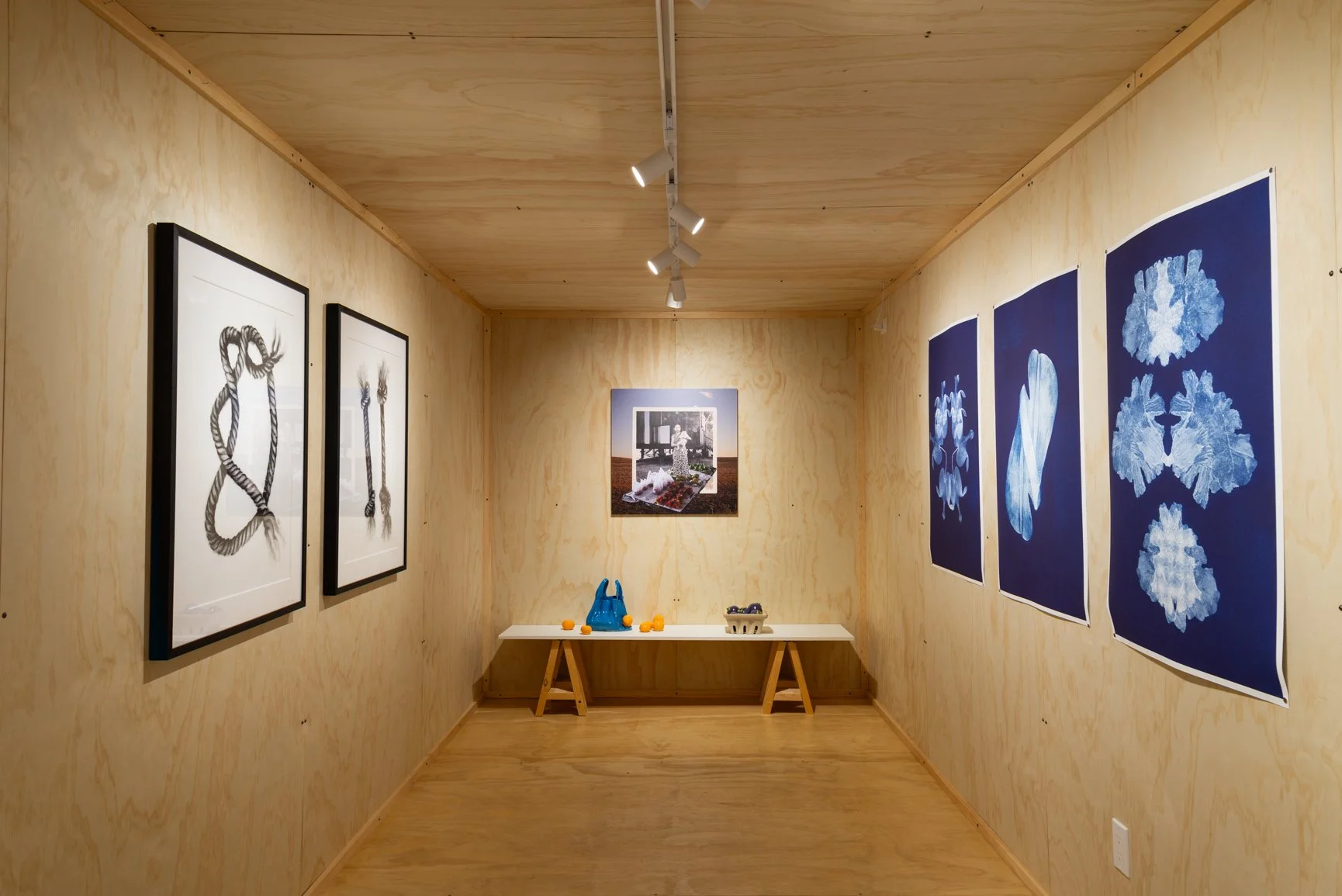
Harm’s Reach project space is a 200 square foot gallery space built from a sea container situated on a private residence with exterior space for seasonal outdoor projects. Programming is dedicated to exhibitions by local and international artists combined with works from various private collections. Located in Calgary, AB, Canada.
The space is shaped by a strong curatorial focus, with each exhibition developed through close dialogue with artists and thoughtful consideration of material, context, and spatial relationships. Its intimate scale allows for human scale installations and concentrated encounters, encouraging close looking, sustained engagement, and meaningful exchange.
Programming emphasizes collaboration across geographies and disciplines, creating opportunities for artists to test ideas, present new work, and participate in cross-cultural conversations. The project space functions not only as a site of display but as a gathering point, fostering connection between artists, audiences, and the broader community.